

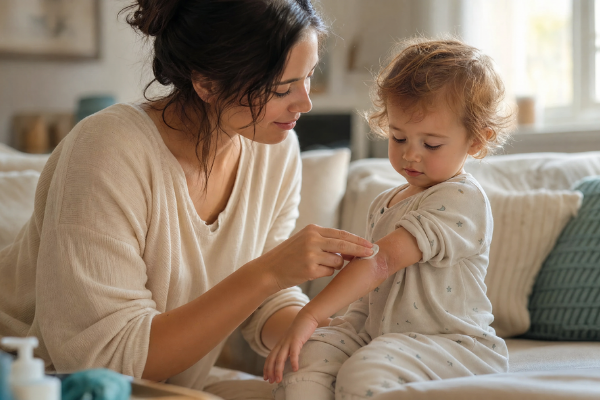
Eczema in Children: Causes, Symptoms, and Treatment — A Complete Guide for Parents
Quick answer: Eczema in children is a common, non-contagious skin condition that causes dry, itchy, inflamed patches, most often on the face, elbows, and knees. It’s caused by a weakened skin barrier combined with genetics and immune response, and while there’s no permanent cure, most children manage it well with daily moisturizing, trigger avoidance, and guidance from a doctor.
If your child has red, itchy patches of skin that won’t go away, you’re not alone — eczema in children is one of the most common skin conditions parents deal with. This guide walks through what causes it, how to spot it, and the practical steps that actually help.
What Is Eczema in Children?
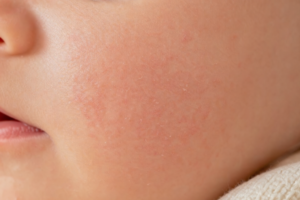
Eczema, medically known as atopic dermatitis, is a chronic condition that makes a child’s skin dry, inflamed, and itchy. It often starts in the first year of life, and many children improve significantly by school age, though some carry it into their teens or adulthood.
It happens because the skin’s outer barrier — which normally locks in moisture and keeps out irritants — doesn’t work as well as it should. That lets moisture escape and lets irritants in, which is why eczema-prone skin dries out and flares up so easily.
How Common Is Eczema in Kids?
Eczema in children is far more common than most parents realize. In the United States, atopic dermatitis affects roughly 1 in 9 children, according to the Asthma and Allergy Foundation of America. In the UK, around 20% of children have eczema, and about 1 in 20 have a severe form, according to the National Eczema Society.
The takeaway: if your child has eczema, you’re dealing with one of the most well-studied and well-understood conditions in paediatric skincare — not something rare or mysterious.
What Causes Eczema in Children?
There’s no single cause. Eczema usually develops from a mix of the following:
- Genetics – children with a family history of eczema, asthma, or allergies are more likely to develop it themselves.
- Immune system response – the immune system overreacts to common irritants and allergens, triggering inflammation.
- Skin barrier differences – some children are born with a weaker skin barrier, making it harder to retain moisture.
- Environmental factors – weather changes, harsh soaps, and certain fabrics can worsen symptoms once the skin is already sensitive.
Eczema is not caused by poor hygiene, and it isn’t something a parent did wrong.
Signs and Symptoms of Eczema in Children
Eczema Symptoms in Babies
In babies, eczema commonly appears on the face, scalp, and outer arms/legs, showing up as dry, red, slightly raised patches that may look scaly.
Eczema Symptoms in Older Children
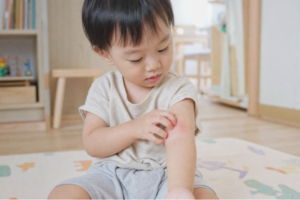
As children grow, eczema tends to move into the creases of the elbows, knees, wrists, and ankles. Common signs at any age include:
- Dry, rough, or sensitive skin
- Red or brownish-grey patches
- Intense itching, often worse at night
- Small bumps that may leak fluid when scratched
- Thickened or cracked skin from repeated flare-ups
Types of Eczema in Children
- Atopic dermatitis – the most common type, and the main focus of this guide.
- Contact dermatitis – triggered by direct contact with an irritant, like a soap or fabric.
- Seborrheic dermatitis (cradle cap) – common in babies, causing greasy, scaly patches on the scalp.
- Nummular eczema – coin-shaped patches, less common in young children.
Common Eczema Triggers
- Dry air or sudden weather changes
- Sweat and overheating
- Harsh soaps, detergents, or fragranced products
- Rough fabrics like wool or synthetics
- Dust mites, pet dander, and pollen
- Certain foods in some children (discuss with a doctor before removing anything from the diet)
- Stress, even in young children
Keeping a simple flare-up diary — noting what your child ate, wore, or was exposed to — helps you and your paediatrician spot patterns.
How to Treat Eczema in Children at Home
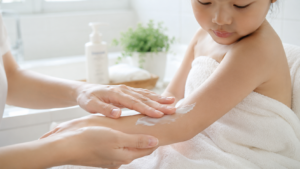
- Moisturize generously, at least twice a day — and right after bathing, while skin is still damp, using a thick, fragrance-free ointment or cream.
- Bathe smart — lukewarm water, 10–15 minutes max, soap-free cleansers.
- Pat dry, don’t rub — rubbing irritates already sensitive skin.
- Choose soft, breathable fabrics — cotton over wool or synthetics.
- Keep nails short — this limits skin damage from scratching.
- Manage the environment — a humidifier helps in dry weather; wash new clothes before first wear.
- Avoid known triggers — once identified, reduce exposure where possible.

When to See a Doctor About Your Child’s Eczema
Book a paediatrician or dermatologist visit if:
- Eczema is severe, widespread, or not improving with home care
- You notice signs of infection — increased redness, warmth, swelling, or pus
- Your child is losing sleep from the itching
- Over-the-counter treatments aren’t helping
- You suspect a food allergy may be involved
A doctor may prescribe treatments such as topical steroid creams. Never use steroid creams on a child without medical guidance, since incorrect use can cause side effects.
Eczema Myths vs. Facts
| Myth | Fact |
|---|---|
| Eczema is caused by poor hygiene | It’s related to skin barrier function and immune response, not cleanliness |
| Eczema is contagious | You cannot catch eczema from another person |
| Children always outgrow it | Many improve by school age, but some carry it into their teens or adulthood |
| Eczema is just dry skin | It also involves inflammation and immune overreaction — moisturizer alone often isn’t enough during flares |
Frequently Asked Questions About Eczema in Children
Is eczema in children hereditary?
Genetics play a strong role. Children with a family history of eczema, asthma, or allergies are more likely to develop it, though environment and immune response matter too.
Can food cause eczema flare-ups in kids?
In some children, certain foods can worsen symptoms, but this varies widely. Speak with a paediatrician or allergist before removing foods from your child’s diet.
Does eczema in children go away with age?
Many children see major improvement by school age. Some continue to experience symptoms into their teens or adulthood, though usually less severely.
What is the best treatment for eczema in children?
Consistent moisturizing, lukewarm baths, soft fabrics, and trigger avoidance are the foundation. For moderate-to-severe cases, a doctor may prescribe topical treatments.
Is baby eczema contagious?
No. Eczema cannot be spread through contact with another person.
Final Thoughts
Caring for a child with eczema can feel overwhelming during a bad flare-up, but eczema is common, well understood, and very manageable. A consistent skincare routine, awareness of your child’s personal triggers, and support from a trusted paediatrician go a long way toward comfortable, active childhoods.
Sources
- National Eczema Association — Eczema in Children
- National Eczema Society (UK) — Information for Parents and Children
- Asthma and Allergy Foundation of America — Eczema Awareness
This article is for general informational purposes and is not a substitute for professional medical advice. Always consult your child’s paediatrician for diagnosis and treatment.