

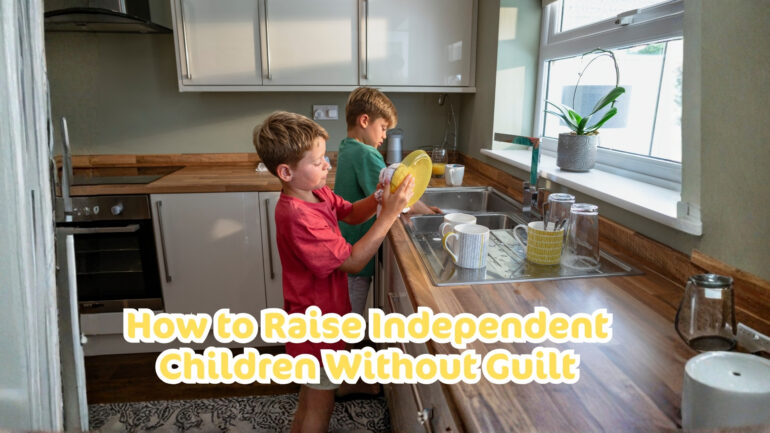
Many parents want to raise independent children, but the journey often comes with an uncomfortable emotion: guilt. When we step back and allow children to try, struggle, or even fail, it’s easy to wonder whether we are doing enough. Are we being supportive or neglectful?
The truth is, learning how to raise independent children does not mean reducing love or care. With the right mindset and a positive parenting approach, independence can grow alongside emotional security, without overwhelming parenting guilt.
Why Raising Independent Children Matters
To raise independent children is not simply about teaching them to do things alone. It is about helping them develop confidence, decision-making skills, and resilience. Research shows that children who experience age-appropriate independence are more adaptable, emotionally regulated, and confident in handling challenges.
When children are allowed to try tasks on their own such as managing schoolwork, preparing simple meals, or solving peer conflicts, they learn a powerful message: “I am capable.” Over time, this belief becomes the foundation of self-esteem.
On the other hand, constantly stepping in, even with good intentions, may unintentionally signal doubt in a child’s abilities. Independence does not weaken family bonds, it strengthens children so they can thrive both within and beyond the family unit.

Understanding Parenting Guilt
Parenting guilt is common, especially among parents who care deeply about doing things right. Guilt often appears when children struggle, make mistakes, or feel uncomfortable and our instinct is to protect them.
Psychologists explain that guilt itself is not harmful. In fact, guilt can be constructive when it encourages reflection and growth. Problems arise only when guilt leads parents to over-control or rescue children too quickly.
Instead of asking, “How do I stop feeling guilty?”, a better question is: “Is this challenge safe and appropriate for my child’s age?” If the answer is yes, allowing the child to experience difficulty can be an important part of learning.

Positive Parenting as the Foundation
Positive parenting focuses on connection, respect, and guidance rather than fear or punishment. This approach creates emotional safety, which is essential when trying to raise independent children.
Children who feel supported are more willing to explore, make decisions, and take responsibility. They understand that mistakes are part of learning not a reflection of their worth.
A child raised with positive parenting does not become independent because they are forced to grow up quickly, but because they trust that support is always available when needed.

Practical Ways to Raise Independent Children
1. Allow children to do things themselves
From toddlers insisting “I can do it” to teens managing their own schedules, independence begins with everyday tasks. Dressing, packing bags, or preparing snacks may take longer, but these moments build confidence.
2. Give age-appropriate responsibilities
Household contributions such as tidying toys, setting the table, or helping with laundry teach responsibility and teamwork. These tasks help children feel capable and valued within the family.
3. Offer choices within boundaries
Choices help children feel respected. Let younger children choose between two outfits, or allow older children to decide how they plan their study time. You provide structure, they practice decision-making.
4. Praise effort, not just results
Focusing on effort encourages children to try again even when things don’t go well. When mistakes are treated as learning opportunities, children become more resilient and confident.
5. Encourage problem-solving instead of fixing everything
When children face challenges, ask guiding questions like, “What do you think you can do?” This builds critical thinking and independence while reminding them they are not alone.
6. Teach basic money and life skills
As children grow, simple lessons about saving, budgeting, and planning help prepare them for real-world independence. These skills support long-term confidence and responsibility.

Frequently Asked Questions
Is it okay to let my child struggle?
Yes. Safe, age-appropriate struggles help children build resilience and confidence. Emotional support is more important than removing every obstacle.
When should I start trying to raise independent children?
Early. Even toddlers can practise independence in simple ways. Independence grows gradually through consistent opportunities.
Can independence conflict with family values?
Not at all. Independence helps children become capable contributors to family and community life while still respecting shared values.
Conclusion: Raising Independent Children Without Guilt
To raise independent children is not about stepping away, it’s about stepping back with intention. It means trusting your child’s abilities while staying emotionally present.
Quick Checklist for Parents:
-
Allow age-appropriate challenges
-
Accept mistakes as part of growth
-
Encourage effort and decision-making
-
Stay supportive, not controlling
-
Let guilt guide reflection, not fear
When independence is nurtured with warmth and guidance, children grow into confident, capable individuals—and parents can release guilt, knowing they are preparing their children for life.